threejs-precipitation-surfaces skill (Threejs-Awesome-Graphics-Agent-Skills)
- Install
- SKILL.md (verbatim)
- Build order
- Required controls
- Failure conditions
- Routing boundary
- Other files in this skill
- references/precipitation-surface-systems.md (verbatim)
- Contents
- Weather state contract
- Wrapped precipitation volume
- Snow accumulation contract
- Object snow capping
- Wet puddle contract
- Rain streaks and splashes
- Debug outputs
- Boundaries and failure modes
What it does. Build coupled precipitation and affected surfaces in Three.js. Use for falling snow, snow accumulation, model snow caps, wet asphalt puddles, procedural ripple normals, splash flipbooks, rain streaks, shared weather envelopes, and surface wetness or coverage transitions. Part of scottstts/Threejs-Awesome-Graphics-Agent-Skills (scottstts/Threejs-Awesome-Graphics-Agent-Skills).
| Upstream | scottstts/Threejs-Awesome-Graphics-Agent-Skills |
| Skill file | skills/threejs-precipitation-surfaces/SKILL.md |
| License | MIT |
| Author | Scott Sun (scottstts) |
| Fetched | 2026-09-10 |
Install
npx skills add scottstts/Threejs-Awesome-Graphics-Agent-Skills --skill threejs-precipitation-surfaces, or copy the skill folder into~/.claude/skills/threejs-precipitation-surfaces/.- Raw file:
curl -sL https://raw.githubusercontent.com/scottstts/Threejs-Awesome-Graphics-Agent-Skills/HEAD/skills/threejs-precipitation-surfaces/SKILL.md
SKILL.md (verbatim)
name: threejs-precipitation-surfaces
description: Build coupled precipitation and affected surfaces in Three.js. Use for falling snow, snow accumulation, model snow caps, wet asphalt puddles, procedural ripple normals, splash flipbooks, rain streaks, shared weather envelopes, and surface wetness or coverage transitions.
Precipitation Surfaces
Treat weather as a coupled event, particle, and surface-response system. Do not add rain or snow particles that are visually disconnected from the ground.
This skill contains exemplary examples and assets beyond descriptive guidance, they're worth studying, referencing, or even copying. Use them sufficiently when relevant and do NOT blindly skip them.
Build order
weather envelope
  -> falling precipitation volume
  -> world/object surface mask
  -> displaced or optical surface response
  -> impact residue and splashes
  -> shared lighting/post presentation
Read references/precipitation-surface-systems.md for snow accumulation, object capping, wrapped precipitation volumes, wet puddle masks, procedural ripple normals, splash placement, debug outputs, and licensing boundaries.
Read the snow accumulation implementation for camera-wrapped snowfall, shared wind/time uniforms, world-space snow masks, single-source snow height and normals, model snow capping, and optional ice surface composition.
Read the wet puddle rain implementation for rain-progress wetness, asphalt puddle masks, procedural ripple normals, instanced rain streaks, upward-surface splash sampling, and flipbook splashes. This example includes GPL-licensed source material; preserve its license boundary when copying or publishing it.
Required controls
- precipitation density and speed;
- wind direction and strength;
- shared weather progress or coverage;
- wetness, snow, or puddle mask threshold and softness;
- ripple or drift normal strength;
- surface roughness response;
- particle/splash opacity;
- debug modes for masks, normals, particles, and event progress.
Failure conditions
- falling precipitation ignores the wind or timing used by surface response;
- snow height and snow normals come from different fields;
- model snow sticks to vertical faces without an upward-facing filter;
- puddles only lower roughness without a mask, normal response, or ripples;
- splashes appear on downward or hidden faces;
- rain streaks allocate per drop or fail to wrap around the camera;
- temporal wetness is faked with unrelated time noise;
- the license boundary for GPL-derived rain code is removed or obscured.
Routing boundary
Use $threejs-water-optics for bounded pool simulation, caustics, Fresnel,
refraction, and Beer-Lambert water volumes. Use $threejs-procedural-vfx for
general sparks, plasma, trails, and non-weather particles. Use
$threejs-temporal-surfaces for screen-space touch history or frost clearing.
This skill owns precipitation events and the surfaces they visibly alter.
Other files in this skill
- agents/openai.yaml
- assets/wet-puddle-rain/GPL-3.0.txt
- assets/wet-puddle-rain/Splash.png
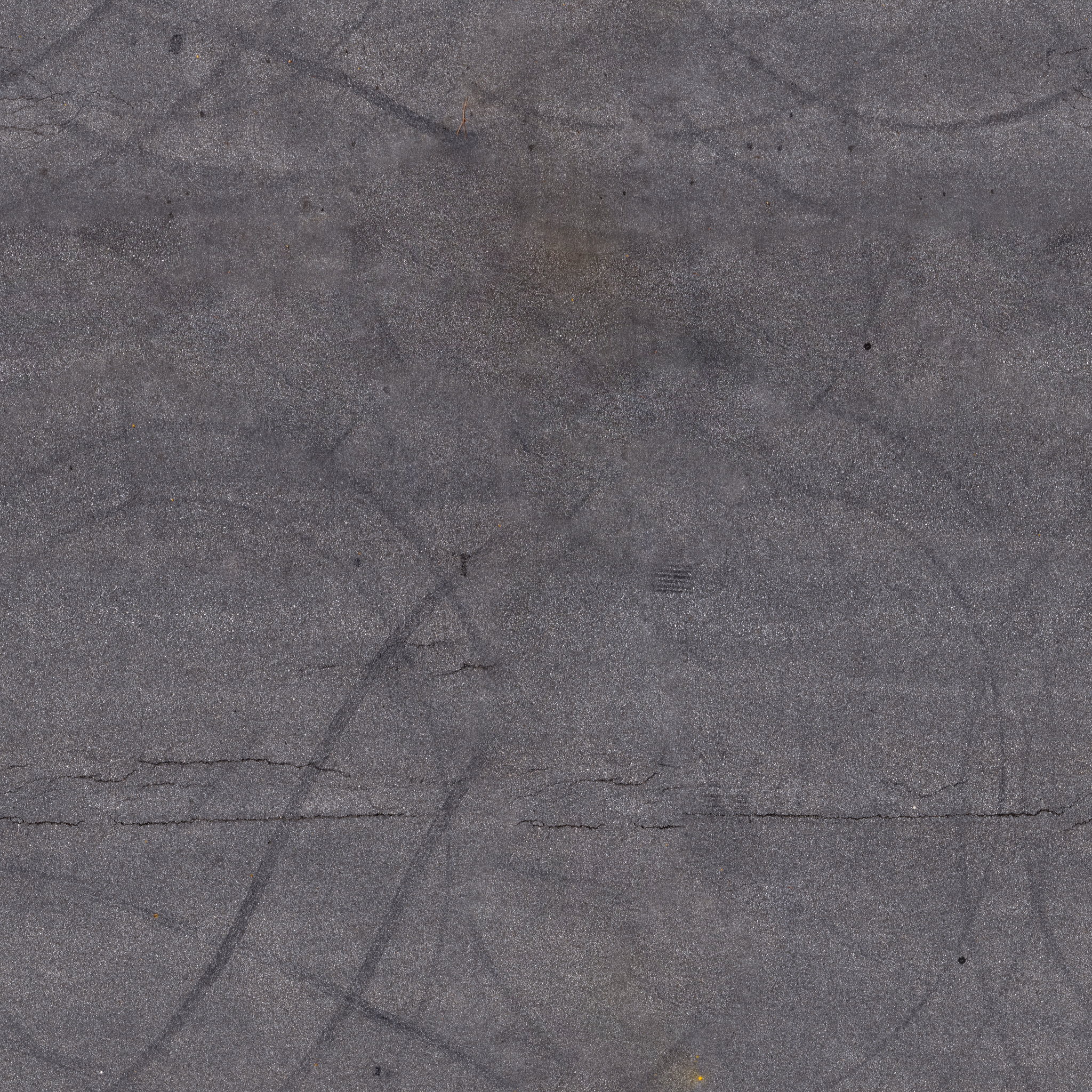
- assets/wet-puddle-rain/road/aerial_asphalt_01_ao_2k.jpg
- assets/wet-puddle-rain/road/aerial_asphalt_01_diff_2k.jpg
- assets/wet-puddle-rain/road/aerial_asphalt_01_nor_gl_2k.jpg
- assets/wet-puddle-rain/road/aerial_asphalt_01_rough_2k.jpg
- examples/snow-accumulation/snow-system.js
- examples/wet-puddle-rain/rain-puddle-system.js
- references/precipitation-surface-systems.md


references/precipitation-surface-systems.md (verbatim)
Precipitation Surface Systems
Precipitation reads as real only when particles, surface masks, normals, roughness, and impact residue share the same event state. The following contracts describe two reusable families: snow accumulation and wet rain puddles.
Contents
- Weather state contract
- Wrapped precipitation volume
- Snow accumulation contract
- Object snow capping
- Wet puddle contract
- Rain streaks and splashes
- Debug outputs
- Boundaries and failure modes
Weather state contract
Use a small shared state object for weather systems. The state is passed by reference into both particles and surfaces.
const weather = {
  uTime: { value: 0 },
  uWind: { value: new THREE.Vector3(1.2, 0, 0.5) },
  uProgress: { value: 0 },
};

function updateWeather(delta, target) {
  weather.uTime.value += delta;
  weather.uProgress.value = THREE.MathUtils.damp(
    weather.uProgress.value,
    target,
    0.9,
    delta,
  );
}
Do not give rain particles one clock and puddle ripples another. Do not sample wind in screen space for particles and world space for surfaces. The wind vector is horizontal and is interpreted as world units per second for moving precipitation, while scalar progress controls wetness or coverage.
Wrapped precipitation volume
A camera-centered volume avoids finite emitter edges. Each instance stores a
normalized spawn point and a random seed. The vertex shader turns that into a
world position and wraps all axes with mod.
vec3 origin = uCameraPos - vec3(vol.x * 0.5, vol.y * 0.4, vol.z * 0.5);
float speed = uSpeed * (0.6 + 0.7 * aRand);
vec3 base = aSeed * vol;
vec3 disp = vec3(uWind.x, -speed, uWind.z) * uTime + sway;
vec3 pos = mod(base + disp - origin, vol) + origin;
For snow, use soft round camera-facing billboards with opacity around 0.9,
flake radius around 0.07, speed around 3.2, and a horizontal sway near
0.5. For rain, use narrow vertical or uneven-capsule billboards and a faster
fall speed, commonly around 5 world units per second in an inspection-scale
scene.
Snow accumulation contract
Ground snow needs one height function. The same function displaces vertices and feeds finite-difference normals.
float snowMaskAt(vec2 worldXZ) {
  vec2 p = worldXZ * uSnowScale + uSnowSeed;
  float n = fbm(p) * 0.5 + 0.5;
  float threshold = 1.0 - uSnowCoverage;
  return smoothstep(threshold - uSnowEdge, threshold + uSnowEdge, n);
}

float snowHeightAt(vec2 worldXZ) {
  float mask = snowMaskAt(worldXZ);
  float drift = fbm(worldXZ * uSnowBumpScale) * 0.5 + 0.5;
  float h = mask * (1.0 - 0.4 * uSnowBumpStrength +
                    0.4 * uSnowBumpStrength * drift);
  vec2 edge = smoothstep(10.0, 8.0, abs(worldXZ));
  return uSnowDepth * h * edge.x * edge.y;
}

vec3 groundSurfaceNormal(vec2 worldXZ) {
  float e = 0.08;
  float h0 = snowHeightAt(worldXZ);
  float hx = snowHeightAt(worldXZ + vec2(e, 0.0));
  float hz = snowHeightAt(worldXZ + vec2(0.0, e));
  vec2 grad = vec2(hx - h0, hz - h0) / e;
  return normalize(vec3(-grad.x, 1.0, -grad.y));
}
The snow material response should override albedo toward a cool white, push
roughness to roughly 0.82, and add sparse sparkle only inside the snow mask.
The sparkle is a material response, not a separate particle layer.
Object snow capping
Object snow must be model-locked. Compute a world-to-model matrix for the host object and sample coverage in that coordinate space so moving or rotating the object does not slide the snow pattern.
float snowAccumAt(vec3 worldNormal, vec2 modelXZ) {
  float up = clamp(worldNormal.y, 0.0, 1.0);
  float top = smoothstep(uSnowFlatThreshold, 1.0, up);
  return top * snowCoverageMask(modelXZ);
}
Typical controls are uSnowFlatThreshold = 0.35, uSnowThickness = 0.06,
uSnowCoverage = 0.7, and uSnowEdge = 0.15. Displace along the object normal
but convert from world units to local units using the mapped normal length.
Wet puddle contract
Wet asphalt is a material transition driven by rain progress. Use separate progress bands: roughness changes early, ripple normals arrive as the rain becomes heavy.
float roughnessProgress = smoothstep(0.0, 0.75, uRainFactor);
float normalProgress = smoothstep(0.75, 1.0, uRainFactor);
float puddleNoise = getPuddle(vPosition.xy * 15.0);
float puddleMask = smoothstep(0.0, 1.0, puddleNoise) * normalProgress;
The puddle roughness is intentionally collapsed toward the 0.0..0.1 range
inside the mask. Ripple normals are analytic: every local cell emits expanding
rings with finite-difference slope estimation. Keep the ripple normal separate
from the static asphalt normal until the final normal handoff.
Rain streaks and splashes
Rain streaks can be instanced quads. Their fragment shape may use an uneven
capsule SDF and alpha around 0.1 * rainProgress. Splash placement should use
surface sampling weighted by upward normals.
const skyWeight = normal.dot(new THREE.Vector3(0, 1, 0)) >= 0 ? 1 : 0;
geometry.setAttribute("skyWeight", new THREE.BufferAttribute(weights, 1));
sampler.setWeightAttribute("skyWeight");
Each splash instance owns a progress attribute. A flipbook shader maps progress
to a tile in a 4 x 5 atlas, fades by rain progress, and uses additive
blending. The splash mesh should face the camera around Y.
Debug outputs
Expose at least:
final: complete weather and surface response;mask: snow or puddle coverage only;normals: accumulated snow normal or ripple normal;particles: precipitation density and fall volume;progress: shared rain or snow envelope.
Diagnostics should report active instance count, coverage, and whether the surface response is reading the same time/wind uniforms as particles.
Boundaries and failure modes
Use a water-volume skill when the system needs refraction through a bounded water body, caustics, or Beer-Lambert thickness. Use a general VFX skill for non-weather particles. Use a screen-space temporal-surface skill for touch history, not for world-space wetness.
Known failure modes:
- snow silhouettes rise but normals stay flat;
- object snow uses world coordinates and slides under animation;
- puddle masks are independent of roughness and normal changes;
- splashes sample all triangles and appear under objects;
- rain progress affects particles but not the material, or the reverse;
- license notices are stripped from GPL-derived rain code.
Back to scottstts/Threejs-Awesome-Graphics-Agent-Skills or Agent skills.